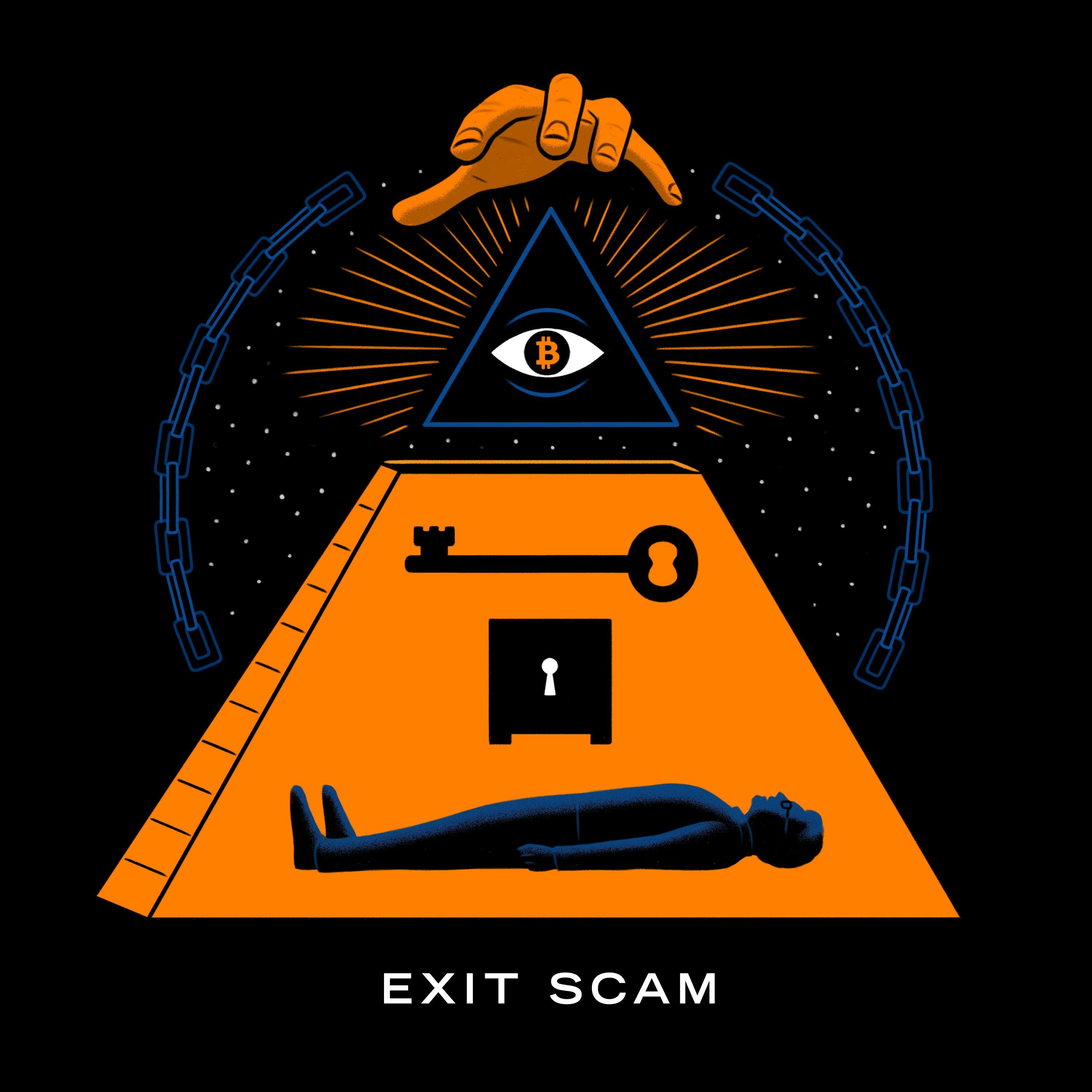
Exit Scam is a long-form investigation into Quadriga, once described as Canada's largest Bitcoin exchange, and the collapse that followed Gerald Cotten's death. The story begins with a clean hook: customers were told their money was trapped because the founder had not left behind the passwords. Then the clean hook starts to fray. The series traces how a missing-password story became a larger inquiry into fraud, identity, control, and whether the official explanation could account for the money that vanished. It moves patiently. One episode reaches back to Quadriga's early days and Michael Patron's role as co-founder. Another follows questions around Jennifer Robertson's return from India with Cotten's coffin. Another lingers over paper wallets, private keys, and the possibility that crucial information may once have been stored in a small safe bolted to attic rafters. The crypto details are explained plainly, then folded back into the investigation. The show is strongest when it lets ordinary facts become strange without forcing them into spectacle. A hotel visit in Jaipur, a doctor's clinic, a medical report, and a guarded resort all become part of the reporting map. So do customer losses. Exit Scam keeps returning to the people left behind, including customers who lost large sums or watched life savings disappear. QCX Int, an anonymous Quadriga customer turned detective, gives the series one of its clearest through-lines from suspicion to documentation. Stephen Rombaum adds a more speculative but relevant frame around fake-death cases. Law enforcement is present mostly as an absence: the FBI and Royal Canadian Mounted Police are named, but the series emphasizes the frustration caused by limited public answers. The tone is controlled and dry. It has room for the absurd, including theories about exhumation and vanished keys, but it keeps its center of gravity on evidence. Listeners get a fraud story, a crypto story, and a study of how uncertainty hardens when money is gone. Exit Scam is best for patient true-crime listeners who prefer documents, interviews, and skeptical reconstruction over shock.