Topics / Media & Press Criticism
Media & Press Criticism Podcasts
101 shows and 12,129 episodes sit under Media & Press Criticism.
Find podcasts that argue about who controls the narrative — legacy outlets, press secretaries, independent media, and censorship claims from every political angle.
Swipe · Media & Press Criticism only
Swipe through Media & Press Criticism
Save time discovering your next favourite podcast by listening to just the best minute of an episode.
The media & press criticism slate · every cover a link
All 101 media & press criticism shows →





Next to this on the shelf
Every subtopic on this beat
The beat, written
What is actually on this beat
A headline lands. Then comes the more revealing question: why was it framed that way, which fact got promoted, and what did the audience never hear? The strongest shows here treat news coverage as an exercise in power. They quote the argument, pull at its assumptions, and follow the institutional consequences.
That makes for unusually active listening. Some hosts proceed through interviews and procedural detail. Others use jokes, irritation, or outright confrontation. All reward listeners who want the press examined with the same skepticism the press applies elsewhere.
Following the frame to its source
THE DAILY BLAST with Greg Sargent works through politically fluent, interview-led conversations. The pace is brisk, but there is room for legal mechanics, polling, congressional power, and the practical effects of a public narrative. Trump Rages at GOP to Hurry Up and Rig Midterms as Awful Fox Poll Hits is a useful entry point: the poll and the network carrying it become part of the political story.
The tone can run hot without losing the thread. Claims are tested against institutions and consequences, often through pointed questions that already identify the tension worth investigating. Anyone who prefers criticism tied to process, rather than left as a complaint about bias, is well served by this show.
3 Martini Lunch — Political Humor & Commentary takes a drier route. Its two-person rhythm lets one voice establish the case while the other finds the sharper judgment or joke. Swalwell Resigns, Dems' Hasan Piker Problem, TDS at the NY Times | Last Call shows how easily the conversation can move between a political controversy and the media culture surrounding it. The pleasure is in the quick correction, the skeptical aside, and the refusal to let polished language end the argument.
When the critique becomes the show
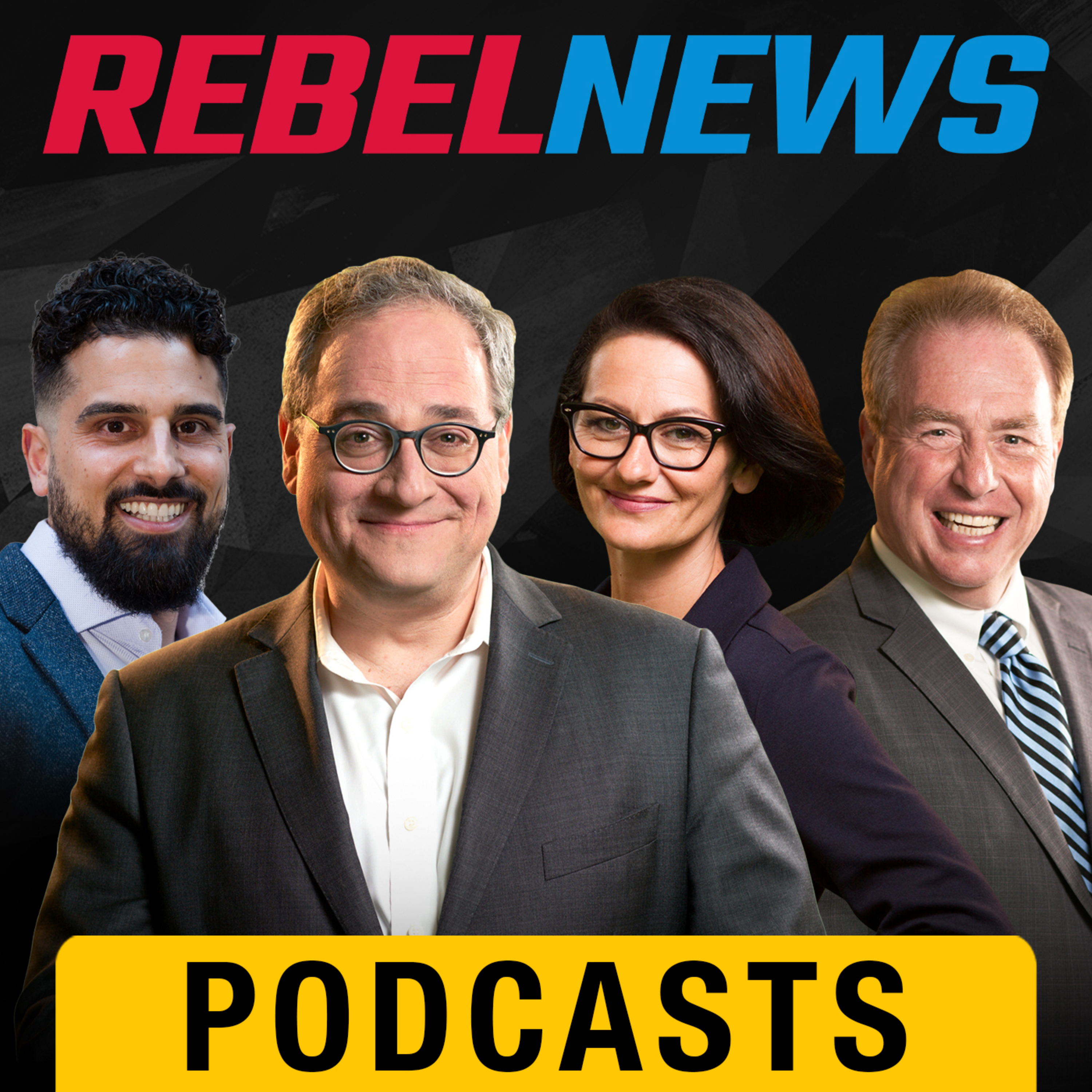
Rebel News Podcast is the most concentrated fit. Rotating hosts combine monologue, clips, interviews, and reader reaction, usually building from a disputed headline toward a broader accusation of institutional failure. EZRA LEVANT | The media establishment just got a massive reality check puts that conflict plainly. EZRA LEVANT | Media silence on church attacks as global power shifts unfold turns attention to omission: what established outlets decline to emphasize, and why that absence matters.
The delivery is close-range and combative. Arguments gather examples, side comments, and sharpened restatements before returning to the original charge. Listeners who prefer press criticism with Canadian politics and a strong anti-establishment posture should begin here.
The Breitbart News Daily Podcast brings the speed and looseness of talk radio. It starts from headlines or public claims, then stretches them into questions about culture, political strategy, and institutional credibility. Troll Caller Exposes Himself As A Racist! And John Nolte On Eric Swalwell And Media Hypocrisy sets out the show’s preferred register, blunt and argumentative, with the accusation stated outright rather than implied. Guest interviews add another voice without displacing the host-led momentum.
Fox Across America w/ Jimmy Failla comes at the same territory through comic riffing. Jimmy Failla uses everyday analogies, rhetorical questions, and sudden detours to puncture language that sounds remote from ordinary life. If the critique should arrive as an impatient radio monologue rather than a methodical analysis, the cleanest way in is Jimmy's Monologue - Media needs to pick a lane with Trump and Iran.
Finding the neighboring argument
For a wider range of ideological debate, move up to Political Commentary. Conservative Talk & Commentary stays closer to partisan argument and movement politics, while Foreign Policy & Geopolitics follows wars, alliances, and international power more directly. This page is for the point where attention turns back onto the people selecting the headlines, setting the terms, and deciding which facts lead.
Where to start
Start with Rebel News Podcast for sustained attacks on media institutions, especially EZRA LEVANT | The media establishment just got a massive reality check. Choose THE DAILY BLAST with Greg Sargent when you want polling and press narratives connected to political machinery. For a lighter, faster entry, try Jimmy's Monologue - Media needs to pick a lane with Trump and Iran from Fox Across America w/ Jimmy Failla. Pick 3 Martini Lunch — Political Humor & Commentary when dry back-and-forth sounds better than a solo broadside.
Featured shows below are part of the PlayNext catalog. Updated weekly.
Featured shows
8 shows, described rather than listed
Each has a written blurb stored with the page, with the role its editor gave it on this beat.
Conservative media criticism as riff and punchline — rapid solo monologue calling out press framing, bias, and double standards.
Brisk two-person conservative press criticism — cleaner than solo-monologue format, dry and argument-focused on media bias and narrative.
Breitbart ecosystem media skepticism — host-led talk targeting legacy outlets and mainstream narratives through conservative campaign framing.
Canadian independent-media perspective — press freedom fights, legacy-outlet challenges, and field-reporter confrontations outside the U.S. cable frame.
Narrative warfare as a worldview — episode titles repeatedly use the language of narrative combat and strategic misdirection.
Journalists, government access, and press safety — useful when the press story overlaps with political conflict and reporter targeting.
Anti-Trump side of the press-fight shelf — press secretary spin and White House media relations examined with skepticism pointed at MAGA.
Progressive concern about press pressure and authoritarian media discipline — the worry is political power intimidating the press, not liberal bias.
Where to start
4 routes in, one per reader
Solo monologue with jokes and grievance — starts from a media moment and riffs into a broader political claim about press bias.
Dry, brisk duo that moves quickly from headlines to media-bias verdicts without a single long solo riff.
Field-reporter confrontations and press-freedom fights — a Canadian angle that expands the media criticism lane beyond U.S. cable politics.
Press secretary spin, White House access battles, and the media's role in covering an administration that treats journalists as adversaries.
Glossary
Words this beat uses without explaining
Established mainstream news outlets — newspapers, television networks, and their digital arms — often used critically by conservative and independent commentators.
The story frame a media outlet or political actor uses to explain events — a term used across the political spectrum, often to accuse opponents of dishonesty.
The legal and political principle that journalists can report without government interference or retaliation — invoked by both left and right in different contexts.
Systematic slanting of news coverage toward a political viewpoint — a charge made most often by conservative critics of mainstream outlets.
A frame used by some independent and populist shows treating political media as an active conflict over which version of events dominates public perception.
The White House official who speaks to the press on behalf of the president — their briefings are a recurring flashpoint in media-criticism coverage.