Topics / Islam
Islam Podcasts
210 shows and 42,924 episodes sit under Islam.
Islam podcasts on PlayNext: Mufti Menk sermons, NYU Islamic Center khutbahs, IslamicFinanceGuru on halal finance, and The American Muslim on community life.
Swipe · Islam only
Swipe through Islam
Save time discovering your next favourite podcast by listening to just the best minute of an episode.
The islam slate · every cover a link
All 210 islam shows →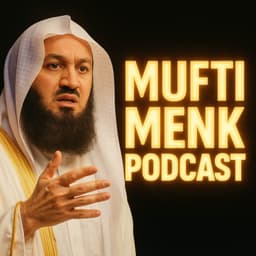



The beat, written
What is actually on this beat
Start by choosing the kind of attention you want to give. Some voices here speak from the pulpit, building an argument through scripture, repetition and direct moral counsel. Others slow down for history, textual study, community testimony or the practical questions of money and work. The difference is less about devotion than format: sermon, lesson, interview or explainer.
Religion & Spirituality is the broader route for readers still comparing traditions or looking for less tradition-specific spiritual listening. If Christianity or Christian Living is your subject, those paths are more direct; for Jewish tradition, choose Judaism. Stay here when you want Muslim scripture, worship, ethics, history or communal life, then narrow the route according to how you prefer to listen.
The sermon as practical counsel
Mufti Menk Podcast is the most immediately accessible starting point. Mufti Menk speaks warmly and plainly, repeating a crucial sentence until it sticks and moving easily between Qur’anic Arabic and direct English explanation. His tone is familial, but the advice can be firm. Family strain appears in Lecture - Dealing with Family Problems | Mufti Menk, while The Pressure to be "Perfect" | Mufti Menk and Lecture - The Effectiveness of Social Media | Mufti Menk bring the same pastoral voice to recognizable pressures of contemporary life.
NYU Islamic Center Podcasts has the atmosphere of live community teaching. Its rotating speakers sound conversational even when the structure is unmistakably sermonic, moving from sacred text toward conduct through patient examples and occasional humor. Try Vulnerability in Difficult Times | Khutbah by Imam Khalid Latif for one entry point, or Lessons From the Story of Prophet Musa and Khidr (AS) | Khutbah by Br. Tamim Islam when a scriptural story is the draw.
DeenStrong is similarly teacherly, though its cadence is steadier and more reflective. Concrete images from family life and ordinary responsibility carry the moral argument. Its practical orientation is easy to see in, for example, Justice Starts at Home | Friday Sermon and Welcome The Youth In The Masjid | Friday Sermon. These shows sit naturally on the Sermons & Lectures route, alongside voices that favor khutbah-length development over quick answers.
Reading, interpretation and sacred history
Listeners who want to remain close to the text should move toward Quranic Studies & Tafsir. Learn About Islam offers dense, continuous lessons in which Arabic terminology and citation are followed by plain-English explanation. The multi-part sequence represented by 4 - Tafseer Surah Al-Fatiha by Shaykh Hammaad al-Ansaaree - Shaykh Kashiff Khan | Manchester rewards sequential listening. Its rhythm is cumulative: text, interpretation, practical implication, then another pass at the central point.
Yusuf Circle Sheffield is looser in structure and more conversational in diction. Questions, objections and requests for proof drive the lesson forward, while scholarly references and historical reports accumulate around the argument. S2 - Surah Qasas (28) Verses 7-8 offers a clean route into its Qur’an-focused teaching. When hearing the recited text matters more than extended explanation, continue instead to Quran Recitation.
Voice of the Youth brings more political urgency to scripture and history. The speakers move between Arabic quotation, public events and forceful moral argument, addressing listeners who already recognize the religious frame. Its range includes Tafsir of Surah Al-Mursalat and Lessons from the Life of Imam Malik. For more sustained historical narration, Islamic History is the better next route; for doctrine and moral instruction across periods, choose Islamic Theology & Teachings.
Ramadan, character and accountability
Taraweeh Reflections speaks in extended, insistent lectures shaped by Ramadan, Qur’anic argument and public responsibility. Repetition works like pressure rather than ornament. Ramadan Reflection Day 21- Laylatul Qadr: What We Lost, What We Must Seek - Dr. Abdul Wahid makes the seasonal focus explicit, while Taraweeh Teachings Day 18- Dhikr is More Than Just Words points toward devotional practice. Follow Ramadan & Spirituality when fasting, prayer and the inward work of the month should remain central.
Najam Institute is faster and denser. Its rotating lecturers weave Qur’anic quotation and Arabic terminology into pulpit-style exposition, usually returning to intention, conduct and self-accountability. The archive includes Taraweeh Gems EP 29 | Ramadan Reflections with Maulana Uzair Mutaqi, an obvious on-ramp for listeners already in a Ramadan listening rhythm.
Other teachers approach the same inward work outside a seasonal frame. Albaseerah Podcasts favors sustained instruction, repeated key terms and direct warnings. Chapter on Being Mindful of Allah (Al-Murakhabah) - Lesson 1 begins a focused lesson sequence, while Chapter on Truthfulness (Sidq) - Lesson 1 opens another. This is patient listening for someone willing to stay with a virtue across several stages of explanation.
Faith in money, institutions and public life
IslamicFinanceGuru Podcasts changes the room. The format can be an interview, lecture or solo explanation, and the language moves comfortably among Islamic principles, contracts, careers and startup culture. Sultan Choudhury | Building the 1st UK Islamic Bank, Islamic Mortgages DISSECTED, Al-Rayan Analysed signals its appetite for structural detail. Zakat expert: "Zakat isn't supposed to make you feel good" shows how financial practice becomes a moral question rather than a lifestyle accessory.
Islamic Donate Podcasts is brisker and more scaffolded. Two complementary voices define terms, distinguish cases and translate rules into practical choices for listeners who may be learning as they go. Questions are admirably specific: What Happens If You Forget to Pay Zakat?, Is Digital Gold Halal for Investment? XAUT and PAXG Review and How To Calculate Zakat on Cryptocurrency all tell you exactly what problem is on the table.
The American Muslim Podcast opens outward through long-form community interviews. Biography comes first, then faith, service, family or institutional life emerges through patient follow-up. The tone is intimate and willing to let a guest’s experience develop without hurrying toward a lesson. Start with Malik Shaw, Executive Director of Midtown Mosque: At His Best When Serving or Leadership & Wellness with Dr. Kameelah: Faith, Healing & Community.
Connecting the Global Ummah is the sharper political counterpart. Its rotating speakers join religious teaching to geopolitical argument in grave, monologue-driven lectures. Why Has the US-Israeli War on Iran Failed states that public focus directly, while Tafseer of Surah Al-Kahf (Ayahs 6-9) About Mocking Revelation, Rejecting Truth begins from scripture. Expect extended claims, repeated emphasis and very little conversational cushioning.
Where to start
For warm, immediately usable counsel, begin with Mufti Menk Podcast. Choose Learn About Islam when close textual study and technical vocabulary are welcome. IslamicFinanceGuru Podcasts is the strongest on-ramp for faith applied to money, contracts and careers, while The American Muslim Podcast suits listeners who prefer lived experience and patient community conversation. From there, Sermons & Lectures, Quranic Studies & Tafsir, Ramadan & Spirituality or Islamic History can take you deeper in the direction that held your attention.
Featured shows below are part of the PlayNext catalog. Updated weekly.
Featured shows
9 shows, described rather than listed
Each has a written blurb stored with the page, with the role its editor gave it on this beat.
Daily pastoral lectures from a globally followed Zimbabwean scholar — warm, direct, and wide-ranging across family, faith, and contemporary Muslim life.
Friday prayers and lectures from NYU's Islamic Center, anchored by Imam Khalid Latif — campus chaplaincy that grounds classical teaching in ordinary modern life.
Long-form interviews with American Muslim leaders, educators, imams, and activists — patient biographical storytelling about service, faith, and community building.
The leading podcast on Islamic personal finance — mortgages, zakat, crypto, and career strategy examined through both financial analysis and Islamic jurisprudence.
A duo explainer format covering halal investment, zakat calculation, and Ramadan observance with definitions-first clarity and brisk pacing.
Chapter-by-chapter study of classical Islamic texts on virtue ethics — deliberate pacing for returning students rather than casual drop-in listeners.
Patient, scripted narration of Islamic history from the early caliphates onward — explanatory and chronological, careful to define terms for the uninitiated.
Community interviews focused on charitable work and institution-building within Muslim communities in the United States.
Quranic exegesis combined with geopolitical analysis — a formally rhetorical voice that reads scripture and current events together.
Where to start
5 routes in, one per reader
Any recent episode is self-contained, the register is warm, and the production is clean — the lowest-friction entry point in the corpus.
Start with any community-leader profile; the biographical arc carries you in without requiring prior religious knowledge.
Search for your asset class or product type — mortgages, crypto, zakat — and they have almost certainly covered it in depth.
Start at Lesson 1 of whichever virtue-ethics series fits where you are in practice; the sequential structure rewards commitment.
Imam Khalid Latif's episodes ground classical teaching in the rhythms of work, study, and city life — short episodes, high signal.
Glossary
Words this beat uses without explaining
The Friday sermon delivered at Jumu'ah prayer — the weekly communal gathering that is obligatory for Muslim men and commonly attended by women.
Obligatory almsgiving, one of the Five Pillars of Islam; a percentage of qualifying wealth above a minimum threshold (nisab) paid annually.
Permissible under Islamic law; applied to food, financial transactions, business practices, and other areas of daily life.
Exegesis or commentary on the Quran — the scholarly tradition of interpreting Quranic verses in context.
Recorded sayings and actions of the Prophet Muhammad, compiled in collections such as Sahih al-Bukhari and Sahih Muslim; a primary source of Islamic law alongside the Quran.
The global Muslim community considered as a collective — used both in a religious sense and, by some speakers, in a political or civilizational one.
The minimum threshold of wealth a Muslim must hold for a full lunar year before zakat becomes obligatory on that wealth.