Topics / Chemistry
Chemistry Podcasts
83 shows and 8,021 episodes sit under Chemistry.
Chemistry World Podcast, The Episodic Table of Elements and Dose Makes The Poison: The Toxcast cover current research, chemical history and toxicology.
Swipe · Chemistry only
Swipe through Chemistry
Save time discovering your next favourite podcast by listening to just the best minute of an episode.
The chemistry slate · every cover a link
All 83 chemistry shows →


The beat, written
What is actually on this beat
A molecule can be a clue, a tool, a hazard, a product, or the beginning of a very long story. The podcasts gathered on the Chemistry shelf make those choices audible. Some explain research for curious nonspecialists; others assume you already know your way around a lab, a technical paper, or a regulatory filing. The right starting point depends less on how much chemistry you remember from school than on how you like to learn.
There is also a striking difference in texture. You can hear a brisk explanation attached to a news story, an unhurried interview about life in research, a bench-side lecture dense with pathways, or a historical reading that preserves every procedural detail. For questions that lead beyond molecules and materials, move back up to the broader Science page. Astronomy heads toward the sky, while Physics stays closer to matter, energy, and the rules underneath; this page remains with chemical substances, transformations, methods, and the people working among them.
Start with the explainers
Chemistry in its element is the broadest conversational entry point. Its question-led format lets an expert introduce technical language, then slows down to test definitions, analogies, and practical consequences. The pairing of topics is part of the appeal: Battery week 2026: The EV cathode race & battery-recycling | The chemical breakdown podcast sits beside The two states of water & science sleuths | The chemical breakdown podcast. That range suits listeners who want research, industry, and science news in the same feed without being dropped into a formal lecture.
Chemistry World Podcast takes a similarly patient route, though its rhythm is especially orderly. A short prompt opens the door; a longer explanation works through definition, mechanism, and significance. It assumes that listeners can handle terms such as pyrophoricity or total synthesis, but it pauses over fuzzy concepts and the limitations of a neat textbook model. Choose it when you want complexity translated rather than removed.
Let’s Talk Chemistry- a science podcast by ChemTalk is warmer and more explicitly scaffolded. Questions lead into expert answers, followed by recaps and bridges that keep the discussion approachable. The titles make its applied curiosity clear: Episode 62: Dr. Bruce McCord on the Chemistry behind Crime Scene Investigations and Episode 59: Dr. Paul Chirik on Modern Alchemy. It is an inviting on-ramp for students, recent graduates, or anyone who prefers an interviewer to keep marking the trail.
EYCN Podcast - Chemistry To Your Ears also works through interviews, but at a steadier and more institutional pace. Answers are allowed to expand through examples, career paths, regions, and professional networks. Its warmth comes from attention to young scientists and practical routes into chemistry-adjacent work, rather than from jokes or rapid banter. This is a good fit when the working life around science matters as much as the headline result.
Inside the lab and the industry
Natural Prodcast feels like a hallway conversation among researchers who already share some vocabulary. Biosynthetic gene clusters, actinomycetes, genome mining, and bench-level details can arrive in a loose, thinking-aloud exchange, softened by clarifying questions and small jokes. Interviews often make room for training, mentorship, lab culture, and the route into a research program. The show rewards listeners who enjoy technical digressions because they reveal how scientists actually think together.
Peak Tales is more procedural. Its conversations resemble practical lab training, with clear questions followed by detailed explanations of choices, tradeoffs, and consequences. Porosity, column volume, re-equilibration, molecular-weight range, and LC-MS belong to its ordinary vocabulary. The tone stays friendly, but the real pleasure is watching a workbench problem get traced from cause to solution.
CMC Live - Chemistry, Manufacturing & Controls goes further into professional terrain. The questions are long because the problems are long: submissions, manufacturing decisions, validation, documentation, agency processes, and the risks created by bad timing or an untested assumption. Guests are given room to reason through the work rather than compress it into slogans. If you already understand the field and want shop talk with a regulatory spine, start here.
Sustainable Nano keeps the specialist conversation looser. It sounds like academics talking at human speed, allowing a memory, career turn, class, experiment, or practical problem to widen into a discussion of research and communication. The exchange can wander, yet the wandering usually reveals how a guest approaches the work. Season 7 Preview is the available signpost for beginning with its current run.
Molecules in bodies and everyday life
Dose Makes The Poison: The Toxcast brings forensic toxicology close to ordinary experience. Its solo explanations move easily between chemical formulas, receptors, analytical methods, symptoms, and blunt conversational asides. A strange symptom, news item, or piece of pop culture may provide the initial hook before the discussion works backward into mechanism and detection. It is technical, but never chilly.
Authentic Biochemistry expects more stamina. Episodes unfold like extended bench-side literature lectures, accumulating receptor names, pathways, experimental conditions, and downstream effects while pausing to distinguish terms that papers may treat too casually. The long sequence titled The Myeloid/Lymphoid Communication Network As Circulatory Cellular Organ A Biochemical Paradigm XX Authentic Biochemistry Podcast Dr Daniel J Guerra 25 July26 shows the scale on which it is willing to stay with one line of inquiry. This is the demanding choice, and the right one when a tidy summary would feel unsatisfying.
Cocktail Party Chemistry moves in the opposite direction, using familiar objects and tastes as its doors into the subject. 161 The Chemistry of Whiskey From Grain to Dram (S1E161), 159 The Chemistry of Cheese From Milk to Mimolette (S1E159), and 155 The Chemistry of Coffee Brewing the Perfect Cup (S1E155) make the invitation plain. Other titles turn toward perfume, fireworks, chocolate, bread, tea, beer, and wine. Pick a thing you already care about and let the molecular questions follow.
My Fave Queer Chemist keeps the person in view. Its interviews are informal, affirming, and comfortable letting guests find their point in real time. Research paths sit alongside mentorship, queer identity, work conditions, disability, burnout, and career uncertainty, with technical detail grounded in someone’s lived experience. For listeners who find institutional profiles too polished, its loose edges are part of the value.
Long views, old experiments
The Episodic Table of Elements is built for readers who enjoy the scenic route. Each scripted solo essay can travel through geography, politics, exploration, infrastructure, or an inherited scientific story before the element takes centre stage. The tone is literate and dryly skeptical, ready to admire discovery while questioning the grand narrative around it. Americium: Mundus Novus offers a direct place to sample that method.
History of Chemistry is denser and more austere. It proceeds through chronology, measurements, apparatus, publications, and chains of experiment and inference, with little pressure to simplify for a casual audience. The run from 062 - Vol 2 Ch 5 Of electro-chemistry Part 1 through 064 - Vol 2 Ch 5 Of electro-chemistry Part 3 invites sustained listening rather than a quick dip. Its patience is the point.
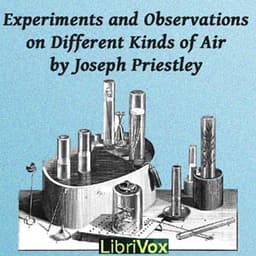
For an even closer encounter with historical scientific prose, Experiments and Observations on Different Kinds of Air by Joseph Priestley (1733 - 1804) has the feel of a formal experimental notebook read aloud. Jars, troughs, candles, water, smells, durations, and altered conditions accumulate before a conclusion is allowed to stand. The pacing is procedural and exacting. Listen when you want to inhabit an experiment rather than receive its modern summary.
Where to start
For a versatile first listen, begin with Chemistry in its element and choose Click chemistry marks 25 years & covalent bonding in the actinides | The chemical breakdown podcast. If you want a guided, student-friendly interview, try Let’s Talk Chemistry- a science podcast by ChemTalk with Episode 62: Dr. Bruce McCord on the Chemistry behind Crime Scene Investigations. For an everyday object turned into a chemical doorway, Cocktail Party Chemistry offers 157 The Chemistry of Chocolate From Bean to Bar (S1E157). And if history is the draw, The Episodic Table of Elements provides the more essayistic route.
Listeners already at home in technical language should head instead toward Natural Prodcast, Peak Tales, or CMC Live - Chemistry, Manufacturing & Controls. Authentic Biochemistry is the deeper endurance test. Those who want the human life around the work will likely settle first into My Fave Queer Chemist or Sustainable Nano.
Featured shows below are part of the PlayNext catalog. Updated weekly.
Featured shows
8 shows, described rather than listed
Each has a written blurb stored with the page, with the role its editor gave it on this beat.
Dr Daniel J Guerra presents patient, technically dense solo lectures that stack receptors, pathways and experimental conditions into biochemical mechanisms for specialist listeners.
Scripted solo essays use history, geography and politics as routes into each element's chemistry. It suits listeners who enjoy following the long path from context to mechanism.
Warm, leisurely interviews give guests room to tell their stories in an informal lab-hallway conversation, guided by prepared questions and affirming check-ins.
Practical, interview-led Q&A turns porosity, column volume, re-equilibration and LC-MS into workbench use cases. It suits lab listeners looking for detailed training.
Question-led academic conversations connect specialized chemistry with science communication, publishing, entrepreneurship and research training while guests think aloud.
Mostly solo explanations make forensic toxicology approachable by pairing chemical formulas, receptors, analytical methods and case details with blunt, conversational asides.
A solo reading follows Priestley's experiments through apparatus, trials, failures, adjustments and inference. It suits listeners who want historical science in procedural form.
Rotating experts answer direct questions about chemistry research in layers, moving from definition to mechanism to significance for technically curious listeners.