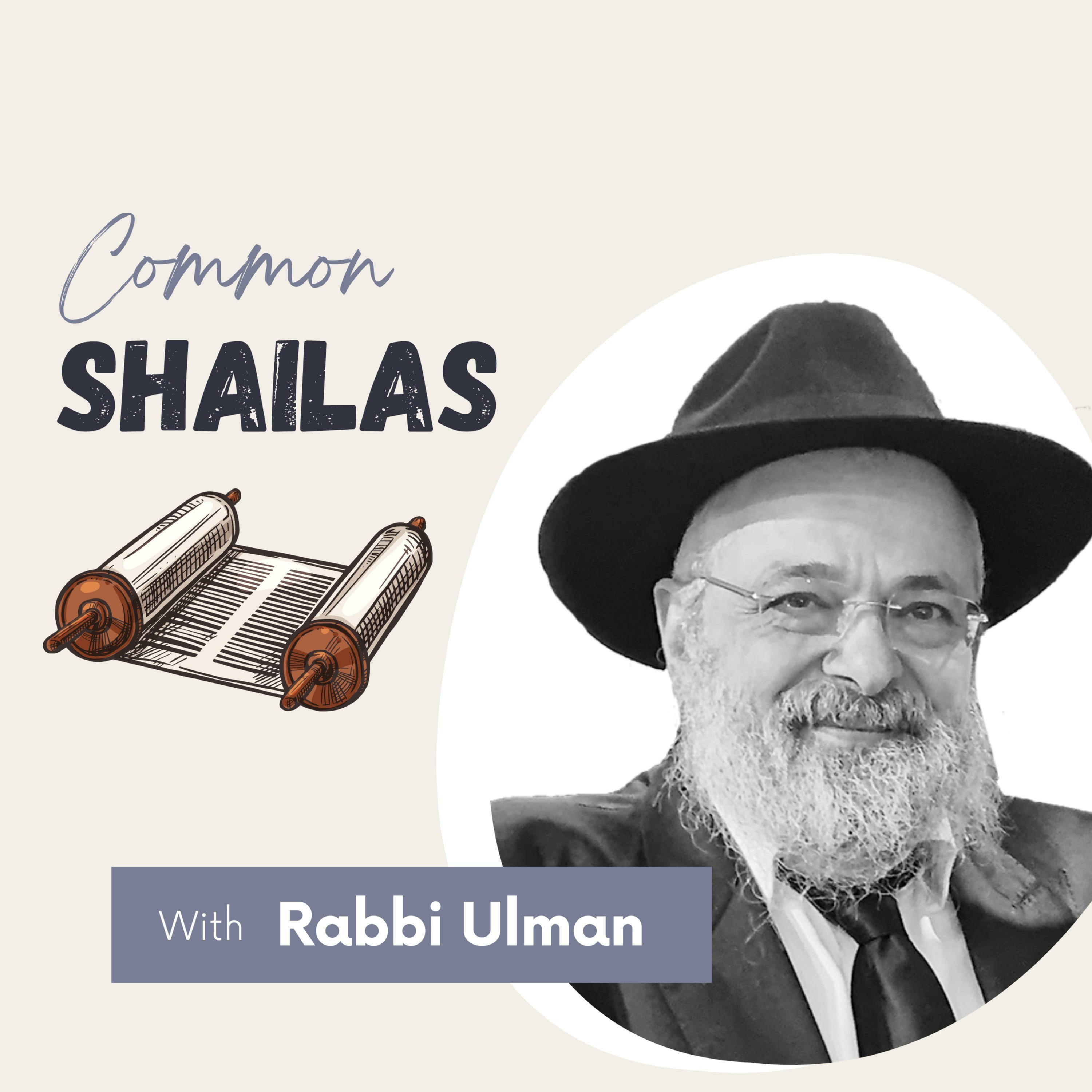
Common Shailas
Learning Judaism
118 episodes
In their own words
Every Jew has questions that they’ve never asked. Rabbi Ulman answers all your common shailas (questions) in a succinct manner focusing on all Halachic authorities and providing insight into different customs. Whether you’re a Torah veteran or dipping your toe back into Yiddishkeit, you’ll be able to follow this podcast with ease. Rabbi Ulman is Av Beis Din of the Sydney Beth Din and founder of Chabad of Bondi. His knowledge is sought after in all areas of Jewish law. If you have any questions or comments, please email [email protected]
Talks about
Podcasts like Common Shailas


 Daily Kitzur Shulchan Aruch with Rabbi Mendel YusewitzRabbi Mendel Yusewitz
Daily halacha, case by case.

 Time for Torah: By Rabbi Elimelech Kohn Zt"lAK Publishers
Parsha questions carried into serious Torah argument.
Episodes
- 1
Do I have to honour a step parent?
This episode explores whether one must honor a step-parent according to Jewish law (halacha), specifically addressing the nuanced question of attending a parent's remarriage wedding after divorce or death.
·2m - 2
What do I do on a Yahrzeit?
Rabbi Ulman discusses the customs and spiritual significance of Yahrzeit, explaining how it commemorates the deceased and elevates their soul through specific mitzvahs.
·19m·1 clip - 3
Can I use a surrogate Mother to have a child if I am unable to conceive naturally?
This episode explores whether one can use a surrogate mother when unable to conceive naturally, focusing on Jewish legal perspectives and biological explanations of reproduction.
·14m - 4
What do I do if I join a minyan just before shkiah and they have already davened?
This episode explains the halachic solution of performing a heichagdusha when joining a minyan just before shkiah after everyone else has already davened, allowing an individual to say kadusha even when praying alone.
·2m - 5
Why do we say Hallel during Hanukkah and not Purim?
This episode explores the rabbinical question of why Hallel is recited during Hanukkah but not Purim, delving into the nature of mitzvahs and prophetic authority in Jewish law.
·12m - 6
What is the latest you can daven Mincha?
This episode discusses the latest permissible time to pray the Mincha prayer according to Jewish law, examining sources from the Mishnah, sages' opinions, and practical considerations like sunset and star visibility.
·10m - 7
Why do we say Musaf on Rosh Chodesh?
This episode explores the origins of the Musaf prayer on Rosh Chodesh, explaining its connection to daily prayers and historical roots in Jewish tradition.
·3m - 8
If I wake in the middle of the night, do I need to wash my hands and mouth in order to have a drink of water?
This episode explores whether Jewish law requires washing hands and mouth before making a blessing on water when waking thirsty at night, tracing historical practices from Talmudic sources through medieval authorities.
·5m - 9
Is a woman wearing a sheitel an issue of maris ayin?
This episode explores whether a woman wearing a sheitel (wig) raises issues of maris ayin in Jewish law, discussing the principle of avoiding actions that appear improper even when technically permissible.
·3m - 10
Can I go to a reform wedding?
A religious authority discusses the complex emotional and religious considerations around attending non-Jewish weddings when one partner is Jewish, emphasizing maintaining family relationships while upholding religious boundaries.
·9m - 11
Do I put the Tallis over my head when davening?
This episode explores the Jewish practice of wearing a Tallis during prayer, specifically whether it should be placed over the head or shoulders, discussing various customs, legal opinions, and Kabbalistic insights.
·4m - 12
Can I take medical marijuana?
A discussion arguing that prescribed medical marijuana should be treated like any other medication when controlled by doctors, addressing concerns about addiction and abuse.
·4m - 13
What is the latest time I can put on Tefillin?
This episode explains the latest permissible times for putting on Tefillin, discussing restrictions on Shabbos, Yontif, and at night based on Halachic rulings.
·5m - 14
Can I remove a tattoo?
This episode discusses whether a person is allowed or obligated to remove a tattoo according to Torah law, concluding that removal is permitted if desired but not required.
·3m - 15
Can someone commit assisted suicide?
This episode explains the Jewish religious perspective that prohibits assisted suicide and euthanasia, even for terminally ill patients, while distinguishing between mandatory life-sustaining care and optional heroic treatments.
·3m - 16
Can I make a bracha for someone else?
This episode explains the Jewish religious rules about whether one person can make a blessing (bracha) for another person, distinguishing between blessings for mitzvahs (commandments) and blessings for benefits like food.
·2m - 17
What is a Mamzer?
This episode explains the Jewish legal concept of mamzer, contrasting its definition and implications in Halacha with secular understandings of illegitimate children.
·9m - 18
If I daven Maariv early, do I include Rosh Chodesh prayers if the next day is not Rosh Chodesh?
This episode discusses whether to include Rosh Chodesh prayers when davening Maariv early if the next day is not Rosh Chodesh, exploring Jewish prayer timing laws and rabbinic opinions.
·6m - 19
Should I bless my kids on Shabbos?
This episode discusses whether Jewish fathers should bless their children every Shabbos, exploring different community customs and traditions around this practice.
·7m - 20
How many people need to daven to form a minyan?
This episode explains the requirements for forming a minyan in Jewish prayer, detailing scenarios with six people davening together and four others participating, and compares Ashkenazi and Sephardi customs for ech kedusha.
·2m - 21
What is the source of saying 100 blessings a day?
This episode explores the Talmudic source and significance of the Jewish practice of reciting 100 blessings daily, examining its origins and importance in religious law.
·6m - 22
Does an engagement have any halachic significance?
This episode explores the halachic (Jewish legal) significance of engagements, distinguishing between formal tznoim agreements and engagement practices across different Jewish communities.
·3m - 23
What is the function of a Mamzer?
This episode explains the concept of a mamzer in Jewish law, distinguishing between two types of forbidden relationships and their consequences regarding marriage and offspring.
·10m - 24
Can I go to a reform funeral?
This episode discusses Jewish religious law regarding attending reform funerals and services, explaining the distinctions between permissible and prohibited situations based on denominational contexts and theological principles.
·6m - 25
What is Pesach Sheini?
This episode explains Pesach Sheini, a Torah concept about the Passover sacrifice, focusing on its unique status as a positive commandment with severe penalties and the ritual purity requirements involved.
·6m - 26
Should someone who is converting put on tefillin?
Rabbi Ulman addresses whether individuals in the conversion process can wear tefillin, examining halachic rulings from the Rambam and discussing exceptions for non-Jews performing mitzvot like Torah learning and Shabbos observance.
·17m·1 clip - 27
Is a Kesuba still kosher if the witnesses are not kosher?
Rabbi Ulman addresses whether a Kesuba remains valid if its witnesses are not kosher, explaining that while it doesn't affect marriage validity, couples cannot live together without one.
·17m·1 clip - 28
Can I watch Shabbos services via CCTV?
This episode discusses whether it is permissible to watch Shabbos services via CCTV cameras, addressing halachic concerns and practical applications.
·4m - 29
Can a man and a women have yichud on zoom?
Sep 3, 2023·1m - 30
Can a man and a woman be in a car together by themselves?
Aug 31, 2023·1m - 31
Will noahides be resurrected with Moshiach?
Aug 29, 2023·0m - 32
Is adoption a mitzvah?
Aug 28, 2023·2m - 33
Can noahides marry each other?
Aug 27, 2023·1m - 34
Can I borrow money from the Tzedakah box?
Aug 24, 2023·0m - 35
Is it better to keep a minhag or honour ones parents?
Aug 23, 2023·1m - 36
How should I hold my Kiddush cup?
Aug 22, 2023·2m - 37
Can I take another Jew to secular court?
Aug 21, 2023·1m - 38
Can I ask another Rav a question if I got an answer from another Rav?
Aug 20, 2023·0m - 39
Can I go into business with a non-frum Jew if they may work on Shabbos?
Aug 17, 2023·2m - 40
Do I keep my gartel on until Aleinu?
Aug 16, 2023·0m - 41
Can I use Hashem's name if I am helping someone else make a bracha?
Aug 15, 2023·0m - 42
Why do some people lift up their Tzitzis during Hagba?
Aug 14, 2023·1m - 43
Do I wear a Tallis before marriage?
Aug 10, 2023·2m - 44
When quoting a pasuk, can I use Hashem's name?
Aug 10, 2023·0m - 45
Do we say Tachanun if there is a mourner at Shul?
Aug 8, 2023·2m - 46
Should I married woman cover her hair when sleeping?
Aug 6, 2023·0m - 47
Should I say 'bless you' when someone sneezes?
Aug 3, 2023·2m - 48
Can I celebrate Mothers/Fathers day?
Jul 26, 2023·0m - 49
Does whisky need to be certified kosher?
Jul 17, 2023·0m - 50
Was the Rebbe in favour of making aliyah?
Jul 6, 2023·2m - 51
What should I study on Shavuos?
May 23, 2023·2m - 52
How often should a woman daven?
May 22, 2023·8m - 53
What is Lag B'Omer?
May 21, 2023·4m - 54
Should I read the 10 commandments on Shavuos if I'm not with a minyan?
May 18, 2023·5m - 55
Why do we learn Sota during the Omer?
May 17, 2023·2m - 56
Can I listen to music during the omer?
May 3, 2023·2m - 57
Can I get married during the omer?
May 2, 2023·4m - 58
What is Pruzbul?
May 1, 2023·5m - 59
Do you make Hagomel after a procedure?
Apr 30, 2023·5m - 60
What do you do if you miss davening?
Apr 27, 2023·5m - 61
Can I get a haircut during the omer?
Apr 27, 2023·0m - 62
Should a man use the mikvah?
Apr 26, 2023·10m - 63
Should a man go to mikvah everyday?
Apr 26, 2023·11m - 64
Can I gamble?
Apr 18, 2023·7m - 65
Can I skydiving?
Apr 18, 2023·5m - 66
What happens if someone ate my Eruv Tavshilin?
Apr 13, 2023·9m - 67
What happens if I miss counting the Omer?
Apr 10, 2023·2m - 68
Should I peel vegetables on Pesach?
Apr 10, 2023·3m - 69
Can I visit a cemetery on Chol Hamoed?
Apr 4, 2023·3m - 70
What to do in a share house during Pesach?
Apr 3, 2023·2m - 71
What should I do about my pet food during Pesach?
Apr 2, 2023·4m - 72
Can I take medication on Pesach?
Mar 30, 2023·3m - 73
What do I do if I find Chametz on Pesach?
Mar 29, 2023·9m - 74
Do I need to kasher my glass utensils for Pesach?
Mar 28, 2023·7m - 75
What happens if the person who buys the communities Chametz decides to keep it?
Mar 27, 2023·6m - 76
How do I rid myself of chametz on Pesach?
Mar 26, 2023·14m - 77
Can you marry someone who has committed adultery?
Mar 20, 2023·6m - 78
Can I daven (pray) in English?
Mar 19, 2023·8m - 79
Are there any issues of yichud on Zoom?
Mar 16, 2023·3m - 80
Can a routine surgery occur on a Friday?
Mar 15, 2023·5m - 81
Can I attend a funeral of a Jew that is being cremated?
Mar 12, 2023·8m - 82
Does a gated housing community have an in-built eruv?
Mar 9, 2023·0m - 83
Can I castrate an animal?
Mar 8, 2023·2m - 84
Why do we get drunk on Purim?
Mar 5, 2023·15m - 85
Can I kill an insect?
Feb 26, 2023·8m - 86
If pareve food cooked on meat utensils, do I need to wait to eat diary?
Feb 23, 2023·4m - 87
Should I say Tehillim after davening?
Feb 22, 2023·8m - 88
What is the mitzvah of Kiddush on Shabbos evening?
Feb 21, 2023·4m - 89
Why the different nusach for Kiddush on Shabbos day?
Feb 20, 2023·4m - 90
What do I do if someone gives me an xmas gift?
Feb 19, 2023·8m - 91
Can I hug my Mother/Father in-law?
Feb 16, 2023·2m - 92
Does a child holding a Chumash count in a minyan?
Feb 15, 2023·7m - 93
Can I take a flight on Friday afternoon?
Feb 13, 2023·7m - 94
Can a Kohen who marries a non Jew duchen?
Feb 12, 2023·12m - 95
My child turned TV on during Shabbos, can I turn it off?
Feb 8, 2023·2m - 96
Why do Lubavitch wear larger Tefillin?
Feb 7, 2023·12m - 97
Is Turkey kosher?
Feb 6, 2023·6m - 98
If I forget to light Yahrzeit candle, can I light next day?
Feb 5, 2023·7m - 99
Can I make my bed on Shabbos?
Feb 2, 2023·1m - 100
Can you eat fish and dairy together?
Feb 1, 2023·11m - 101
What height do you light Hanukkah candles?
Jan 29, 2023·15m - 102
How many candles do you light on Hanukkah?
Jan 26, 2023·13m - 103
How can people daven Shacharis so late?
Jan 25, 2023·14m - 104
What is the latest time you can daven Shacharis?
Jan 24, 2023·9m - 105
Do you bensch if you washed but only ate a little bread?
Jan 23, 2023·2m - 106
Can I make a bracha with bare feet?
Jan 22, 2023·0m - 107
Do you wear a gartel while bensching?
Jan 19, 2023·5m - 108
Do you wear a kapota to a funeral?
Jan 18, 2023·1m - 109
Are Muslims Noahides?
Jan 17, 2023·8m - 110
What happens if a woman misses the candle lighting time for Shabbos?
Jan 16, 2023·5m - 111
Can you carry a child outside an Eruv on Shabbos?
Jan 15, 2023·2m - 112
Does a convert say the bracha "Shelo Asani Goi"?
Jan 12, 2023·1m - 113
Is it kosher to have whisky at a bar?
Jan 11, 2023·3m - 114
Can a man wear a wedding ring?
Jan 10, 2023·1m - 115
Can a husband say Havdalah for his wife if he has already heard Havdalah? (Part 2)
Jan 9, 2023·10m - 116
Can a husband say Havdalah for his wife if he has already heard Havdalah? (Part 1)
Jan 8, 2023·12m - 117
Should I wear Tzitzit to sleep?
Jan 5, 2023·13m - 118
Do I wear tzitzit while swimming?
Jan 5, 2023·3m