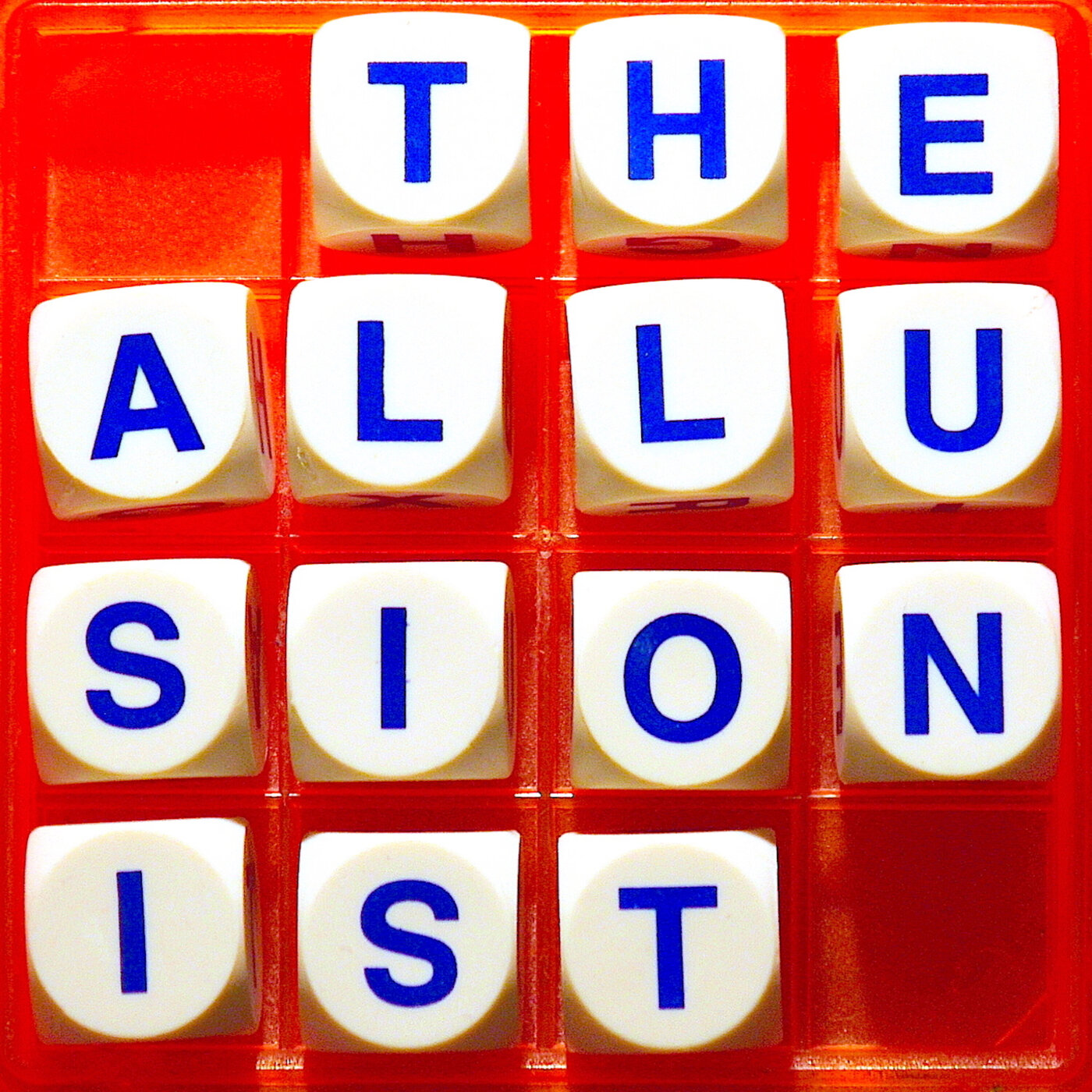
The Allusionist · Helen Zaltzman

210. Four Letter Words: 4x4x4 Quiz

June 7, 2025·24 min·2 clips
Helen Zaltzman launches a quiz where 'light' is an 800-year-old term for a surprising body part.
Host Helen Zaltzman opens by framing the episode as a four-by-four-by-four quiz: four rounds, four questions each, four answer choices per question. Listeners are invited to play along using a score sheet at theillusionist.org/444. She briefly promotes upcoming live shows in Montreal and Vancouver, including an interview with cookbook author Samin Nosrat. Round one begins with word origins and body parts: 'light' is revealed as an 800-year-old term for lung, because lungs are the lighter organs. The word 'foot' is shown to have carried meanings including a person, a unit for weighing lead, and a biblical euphemism for genitals. The etymology of 'nepotism' is traced to the Italian word for nephew, because popes used the term to disguise their biological sons as nephews, with Pope Paul III making teenage grandsons cardinals in 1534. The round's eponym question reveals that John Venn, credited with Venn diagrams he didn't actually invent, really invented a machine for bowling cricket balls. Round two covers collective nouns and acronyms: 'bevy' originated as a collective term for quails; 'limaceous' is the adjective for slugs, whose name originally meant a lazy person. The acronym GOAT is traced to Loni Ali, who incorporated Greatest of All Time Inc. in 1992 to license Muhammad Ali's intellectual properties. The Petri dish eponym question reveals that inventor Robert Koch wanted to call his creation the 'Moist Chamber,' with Julius Petri receiving the credit after tweaking it. Round three addresses mineral names, slang, and insults: the word 'onyx' derives from ancient Greek for fingernail. 'Brat' originally meant a coarse cloak before shifting to mean a child around the turn of the 16th century. 'Rube,' meaning an unsophisticated person, is an abbreviation of the name Rubin. The round's eponym covers Led Zeppelin performing as 'The Knobs' in Copenhagen in 1970 to avoid legal action from Eva von Zeppelin, granddaughter of the airship inventor, who objected to the band profiting from the family name alongside an image of the burning Hindenburg. Round four addresses trademarks, ancient history, and named phenomena: 'gunk' was originally a trademark for a cleaning solvent. Pliny the Elder recorded the Latin word 'sapo' around 77 CE, noting it was used for dyeing hair red and treating scrofula rather than cleaning. 'Accolade' etymologically means to embrace someone around the neck. The final question introduces the Mariko Aoki phenomenon, named after a woman who wrote to Book Magazine in 1985 about feeling an urgent need to defecate in bookshops, a sensation that occurs only after an hour inside and never in second-hand bookshops or libraries. Helen tallies the scoring and closes with a randomly selected dictionary word: 'rostellum,' meaning a little beak or the forepart of a tapeworm's head.

As heard by us

A playful quiz that makes word history feel immediate and oddly useful.

A quiz about four-letter words gives eponyms and etymological detours a playful frame, and Helen Zaltzman keeps it focused enough that the stranger facts feel like part of the game instead of extra garnish.

Read the full review in PlayNext →

Why you'd press play

You want a four-letter-word quiz that keeps your pencil busy and your brain slightly off-balance.

Read the full recommendation in PlayNext →
Listen to the show on