Summer McIntosh swims 3:55.37 for the 400 free and takes Katie Ledecky's US Open record.
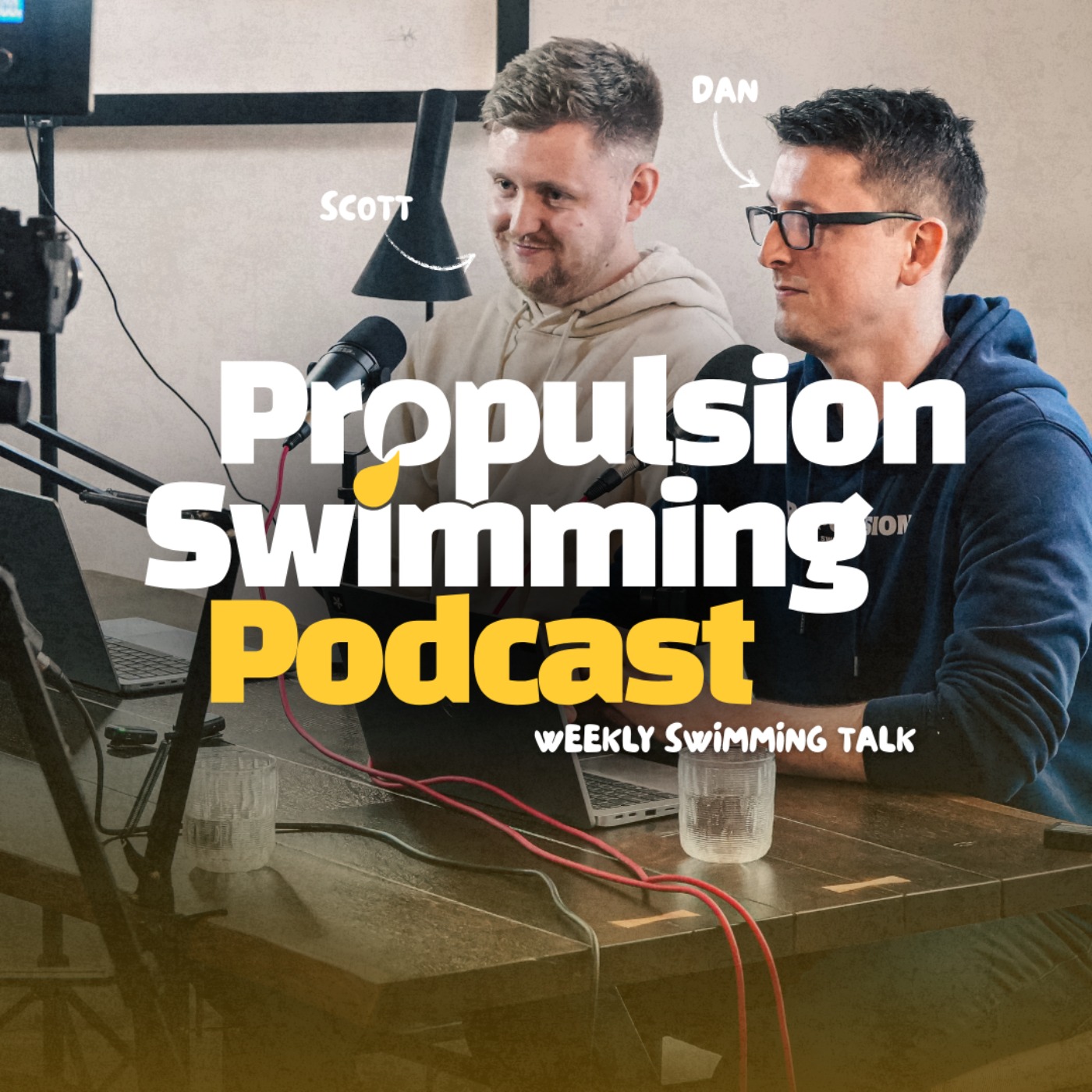
1. Propulsion Swimming Podcast reviews the 2025 US Open and treats it as a December long-course benchmark.
2. Scott and Dan host the episode, and Dan's role is to react to the times while Scott frames the comparisons to British and international standards.
3. The episode asks whether swimming has become fast all year round, with the US Open used as the evidence.
4. Early on, the hosts note that Bobby Fink lost the 1500 freestyle by four seconds and Kathleen Burghoff beat Regan Smith by 0.3 seconds.
5. Carson Foster's 4:07.02 in the 400 IM comes up as a time the hosts say is faster than the British record.
6. The men's 50 freestyle produces five swimmers under 22 seconds, with 21.57 as the winning mark.
7. The men's 100 butterfly also stands out, because two swimmers go under 50 seconds and Shane Casas clocks 50.7.
8. The hosts repeatedly compare the US Open pace to what they expect from summer championships, short-course season, or British winter meets.
9. They argue that swimmers now show up fast more often and may not be targeting only one annual peak.
10. Summer McIntosh is the biggest headline, because she has recently moved to Texas with Bob Bowman and immediately swims 3:55.37 for the 400 free.
11. That swim takes Katie Ledecky's US Open record and ranks as the second-fastest 400 free ever.
12. The hosts also point to McIntosh's 2:02.6 in the 200 butterfly, which they call fourth fastest all time.
13. Leon Marchand returns to competition after the summer and posts 3:44 in the 400 free.
14. Marchand's 200 fly of 1:52.5 is described as world-championship level and close to his Paris pace.
15. Kate Douglass is another major focus, with 2:20.8 in the 200 breaststroke and 2:07.8 in the 200 IM.
16. The hosts say Douglass's turns and underwater skills help explain why she keeps producing fast times across multiple events.
17. Gretchen Walsh and Regan Smith are treated as expected fast performers rather than surprises, which shows how high the bar has become.
18. The episode sounds like a conversational recap between two hosts who keep interrupting each other to compare times, records, and training trends.
19. Listeners who follow elite swimming, US college systems, and record-level performances would get the most from this episode.
20. Listeners wanting a single race breakdown or a slower-paced technical lesson may skip it.