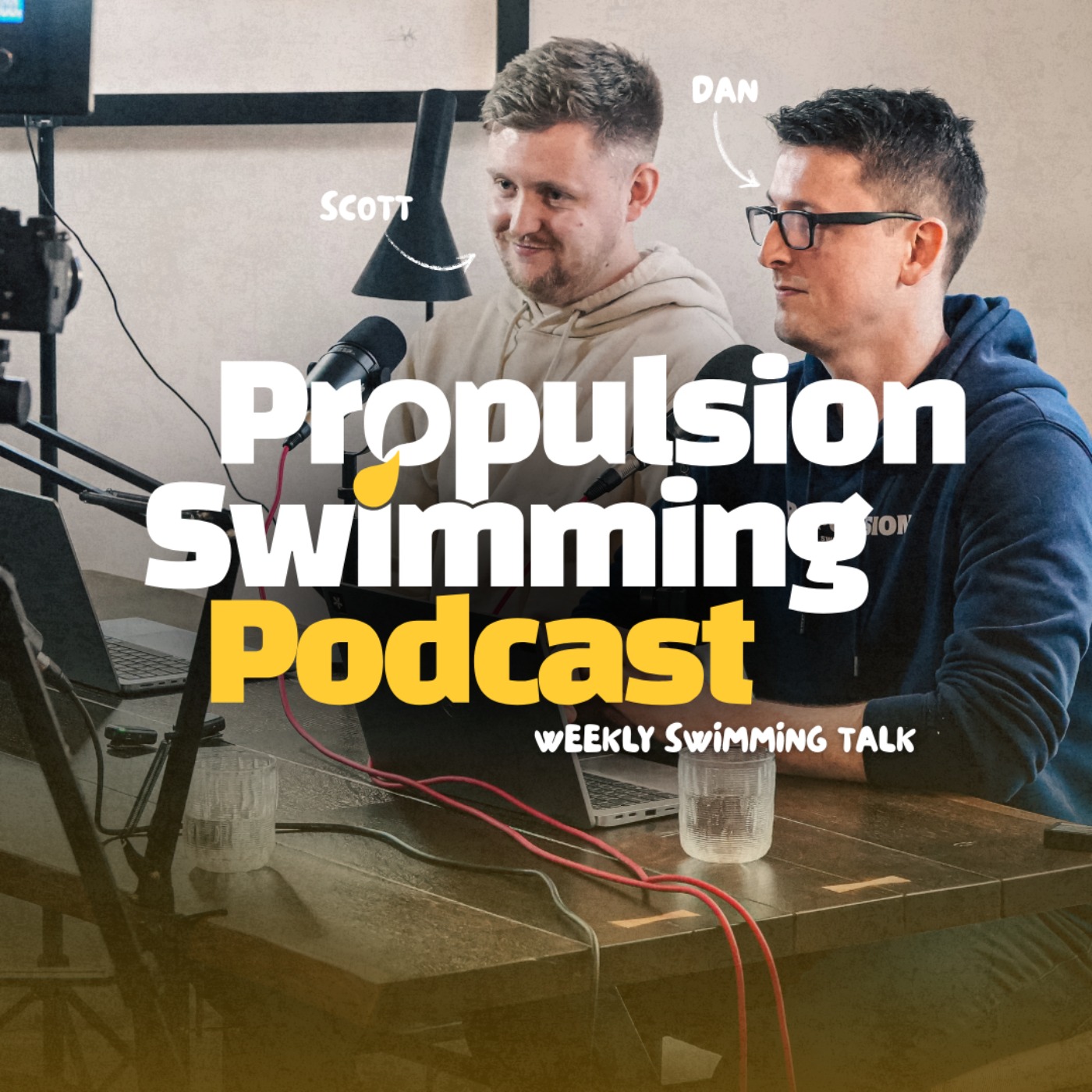
Propulsion Swimming Podcast · Propulsion Swimming

Toronto Review | World Aquatics World Cup 2025

·35 min·2 clips
Lani Pallister took more than three seconds off Katie Ledecky’s 800 free world record.
1. Propulsion Swimming Podcast covers the Toronto stop of the 2025 World Aquatics World Cup series and the record-heavy end of the tour. 2. Sean Linda and his co-host lead the discussion because they are the voices comparing the Toronto swims, the prize money, and the training implications. 3. The episode asks what this World Cup series says about short-course racing, money, and which swims actually mattered most in Toronto. 4. Kasper Corbeau’s form comes up early, with the hosts saying he is still capable of going lower again at European short course. 5. They argue that short-course racing rewards skills repeated week after week and that back-to-back weekends may help swimmers get faster. 6. The hosts note that some swimmers could chase short course for money, but they also point out that the Olympics and long course still matter most to many athletes. 7. Kate Douglass and Molly O'Callaghan are the next comparison point, because both broke world records again in Toronto. 8. Douglass went under 52 seconds in the women’s 100 freestyle, which the hosts treat as a major round-number barrier. 9. O'Callaghan pushed her 200 freestyle world record down again, and the hosts say she is winning that race by two or three seconds over Mollie Pallister. 10. The discussion also links Douglass’s short-course speed to her underwater work and the American college system. 11. Kaylee McKeown’s 200 backstroke gets framed as both a world-record swim and a blow to Regan Smith’s triple-crown bonus. 12. The hosts say McKeown often seems to have the mental edge over Smith at major meets, even when Smith is already in record form. 13. They note that McKeown set an Australian record and an Oceanic record in Toronto. 14. The rivalry is compared to other sports head-to-heads, with the hosts saying swimming benefits when fans can follow who touches first. 15. Hubert Koss is described as the backstroke man now after taking both the 100 and 200 short-course world records. 16. The hosts say Koss’s results are especially interesting because he was not being rested in the way elite taper discussions usually assume. 17. The tone is conversational and speculative, with Sean Linda and the co-host openly talking through race times, prize money, and coaching ideas. 18. The format moves quickly from record analysis to broader questions about racing calendars, ISL-style consistency, and how training might change. 19. Fans of short-course swimming records and training debates will get the most out of this episode. 20. Viewers wanting a polished meet recap with no coaching speculation may skip it.
Listen to the show on