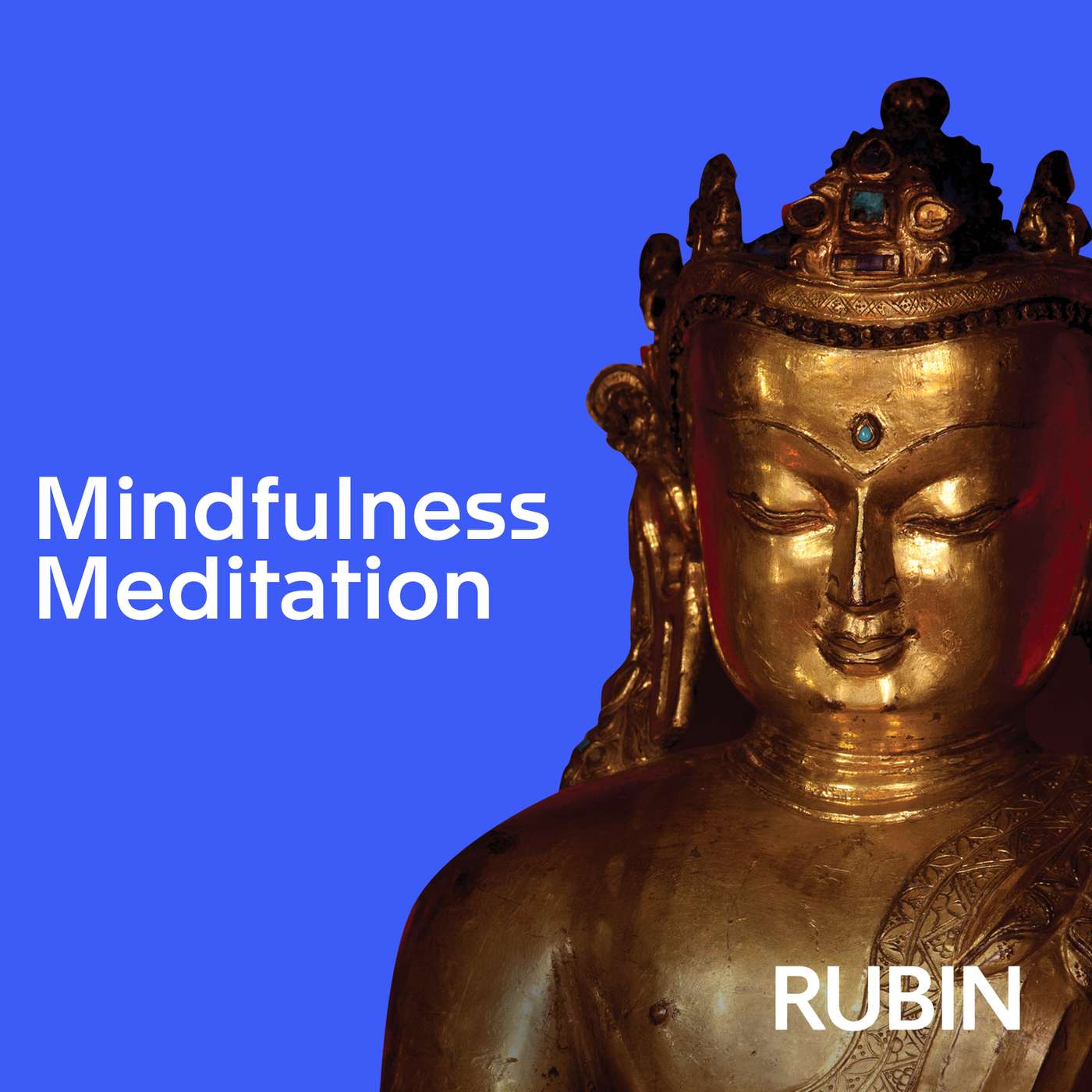
Mindfulness Meditation Podcast · Rubin Museum of Himalayan Art

Mindfulness Meditation with Michel Pascal 07/17/2025

·34 min·3 clips
Michel Pascal reveals how one second of calm can dissolve trauma and restore your pure mind.
This episode features a guided meditation session from the Rubin Museum of Himalayan Art, hosted by Tashi Chodron and led by teacher Michel Pascal. The practice is inspired by a specific ritual object from the museum's collection. Michel Pascal is introduced as a meditation master with 25 years of teaching experience, including programs for prisoners, and as an author and performer. The session focuses on a late 19th to early 20th-century Tibetan prayer wheel, called a Mani Chokor, made of wood, metal, and mineral pigment. Tashi Chodron explains the object contains thousands of rolled mantras, primarily "Om Mani Padme Hum," the mantra of Avalokiteshvara, the Buddha of compassion. She notes the device is spun clockwise and that merit is accumulated through recitation and dedicated to all beings. Michel Pascal begins by discussing the ruminative power of repeating a mantra to calm the mind in a single second. He claims that calming the mind can immediately reduce the impact of emotions and even past traumas. Pascal asserts that stress physically modifies acidity in the stomach, linking it to conditions like gastric reflux. He references a doctor stating that stress can damage arteries, making a young person's heart resemble that of an 80 or 90-year-old. He argues that being stressed is not normal but constitutes a mental, spiritual, and physical sickness. Pascal shares a metaphor from his teacher, Chebadorje Rinpoche, about distinguishing between the chaotic outside world and the peaceful inner world. He describes developing a "meditate like a dolphin" practice after an encounter with a dolphin in Santa Monica, symbolizing diving beneath the waves of emotion. The guided meditation involves visualizing the ocean's waves as emotions and breathing in to dive inward like a dolphin to find peace. Pascal suggests this inner peace is accessible even amidst the noise of New York City. He concludes by connecting the practice to returning to one's "true nature" and basic goodness. The episode's tone is instructional and spiritually reflective, blending art historical context with personal anecdote and physiological claims. The style is conversational and encouraging, aimed at guiding listeners through a practical meditation. Listeners interested in Buddhist art, mantra-based meditation, or alternative perspectives on stress management would appreciate this episode. Those seeking a purely secular, science-focused meditation practice might find the physiological claims and spiritual framework less engaging.
Listen to the show on