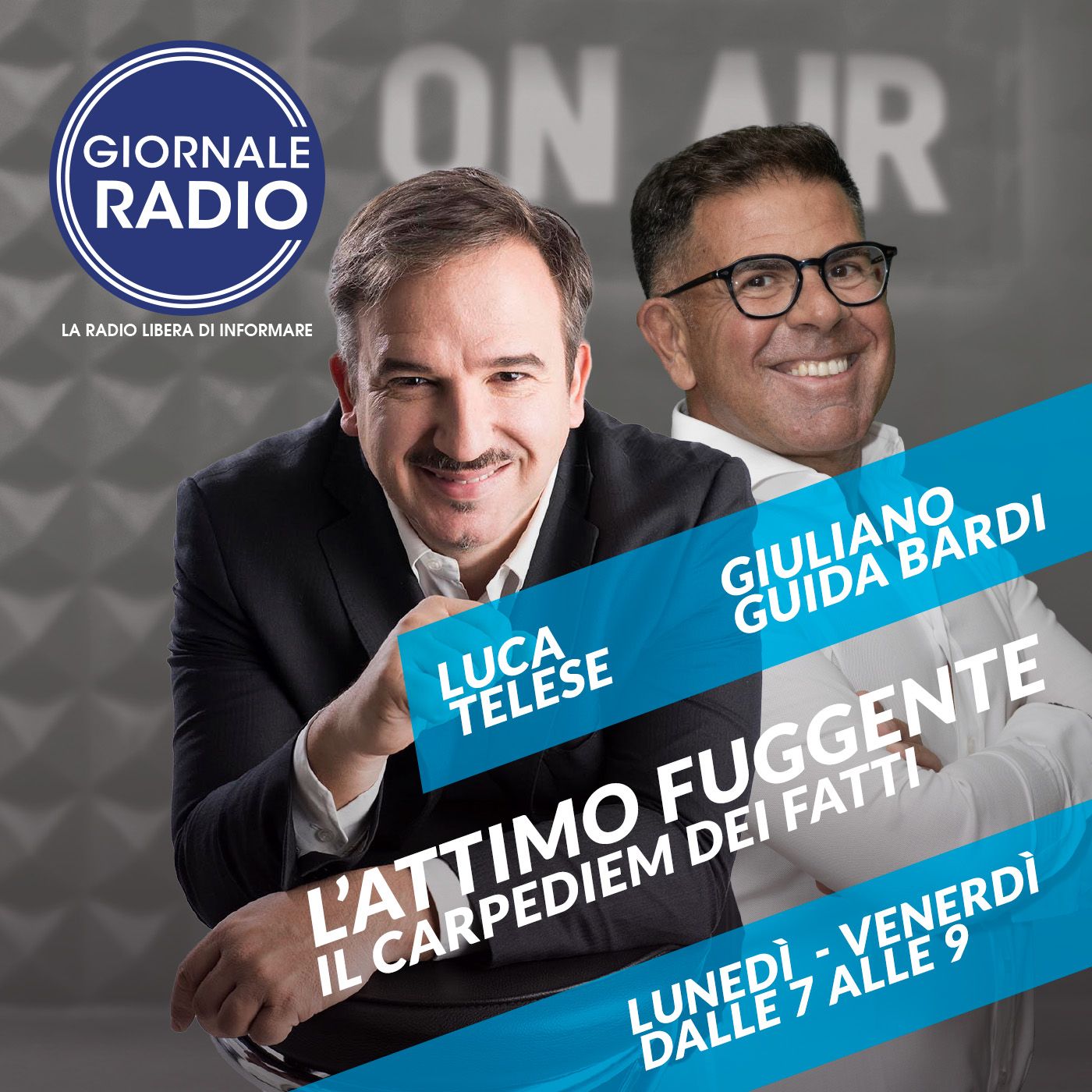
L’Attimo Fuggente con Luca Telese · Giornale Radio

L’Attimo Fuggente di Sabato 11 Aprile 2026

·1 hr 40 min·8 clips
Emanuele Fiano argues that boycotting Tel Aviv harms dialogue with Israeli opposition groups fighting Netanyahu's policies.
1. L'Attimo Fuggente with Luca Telese and Giuliano Bardi, broadcast Saturday April 11, 2026, covers Trump's Iran ultimatum, the Bruno Vespa on-air meltdown, and the Milan PD's vote to end the Tel Aviv city twinning. 2. Host Luca Telese leads with Giuliano Bardi as co-commentator; MP Emanuele Fiano, head of Sinistra per Israele, is the main guest. 3. The episode's central thesis is that the European left's reflex toward boycotts of Israel undermines the Israeli opposition rather than the Netanyahu government it claims to oppose. 4. Trump issued a new ultimatum to Iran after the Hormuz ceasefire, threatening strikes with 'even more powerful weapons' if no deal is reached quickly, sending energy markets into a fresh panic. 5. Bardi argues the threats are 'trampate' — pre-negotiation bluster — and predicts the Strait will reopen within days, while Telese notes Iran holds effective control over up to 20% of global oil supply. 6. Italian petrol prices rose 21.2% — the largest increase since 1967 — and Telese challenges the asymmetry: prices rise within 20 seconds of an oil spike but do not fall when oil drops. 7. On Lebanon, Israeli raids on Beirut continue while Netanyahu's coalition polls at historic lows, with the last standing bridge on the Litani River the subject of a Corriere della Sera report by Marta Serafina. 8. The EU Commission's move to pull Biennale funding from President Pietrangelo Buttafuoco is criticized by Bardi as institutional overreach at a time when European energy independence should be the priority. 9. The Bruno Vespa incident dominates the middle segment: on Porta a Porta, Vespa repeatedly shouted 'Non glielo consento!' at MP Provenzano for suggesting Vespa sit on the other side of the desk. 10. Michele Serra in La Repubblica called Vespa 'a man who lives within power, speaks its language, is its ceremonial companion' — while Libero headlined the episode 'Tentato Vespicidio.' 11. Journalist Ceccarelli analyzed Vespa's body language — 'one hand always in his pocket, aggressiveness exhibited but jammed' — as a 'fake terrible' performance. 12. Milan's PD voted to end the city twinning with Tel Aviv as a protest against Netanyahu's government, prompting Fiano to threaten publicly to leave the party. 13. Fiano presents specific evidence that Tel Aviv is the epicenter of Israeli anti-war activism: a dispersed protest 72 hours before broadcast, 600 professors at an Israeli university signing an anti-war manifesto, and the Standing Together organization marching with photos of Palestinian children alongside Israeli hostages. 14. Fiano describes a human chain of Israelis and Palestinians that marched with flour sacks to the Gaza border in defiance of the Israeli government's supply blockade, which was physically stopped at the crossing. 15. Fiano argues the European left has not organized a major Israeli-Palestinian dialogue conference since the 1980s-90s, citing the European Socialism Party's failure to convene such a meeting as a strategic error that hands the Israeli right its 'everyone is against us' narrative. 16. On antisemitism, Fiano reports a 400% increase in recorded cases in Italy in the past year and defines the threshold — denial of Israel's right to exist — where anti-Zionism becomes antisemitism. 17. On the genocide question, Fiano cites Lemkin's 1947 definition and historical precedents — Wannsee Conference, Cambodian written plans, Rwandan name-lists — and says no equivalent documented elimination project has yet been ruled on by the ICJ after three years of proceedings. 18. The episode uses a call-in format with listener texts read live, audio playback with commentary, and rapid topic switches between geopolitics and Italian domestic politics. 19. Italian-speaking listeners engaged in Israeli-Palestinian debates, RAI media criticism, and Italian left-wing politics will find the episode substantive and current. 20. Non-Italian speakers and listeners unfamiliar with Italian domestic political figures will not find sufficient accessible context.
Listen to the show on