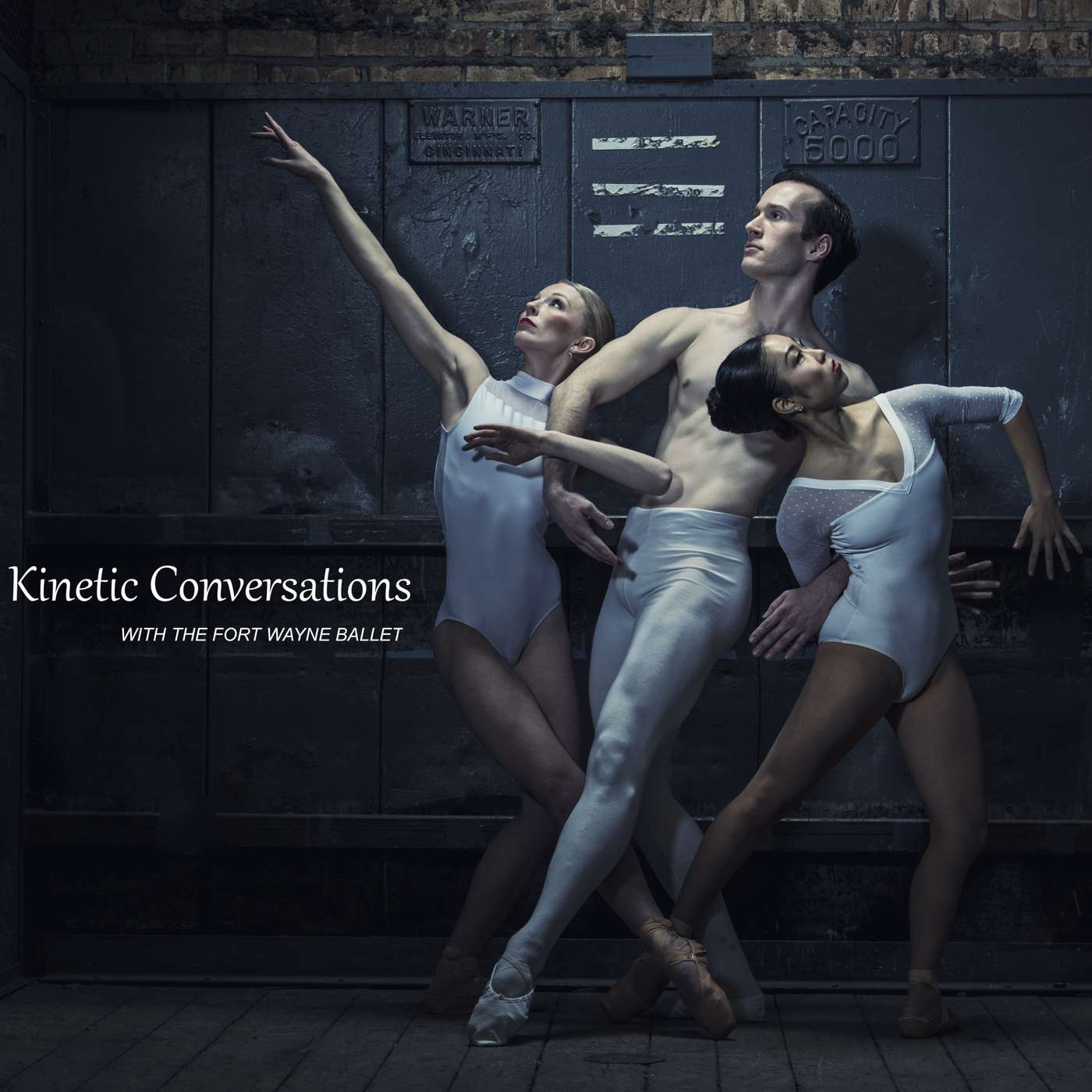
Kinetic Conversations with the Fort Wayne Ballet · Jim Sparrow, John Dawkins

Life of Stierle Miniseries: Episode 1, "Who Was Eddie?"

·29 min·2 clips
Eddie Sterling's short career at the Joffrey Ballet ended at 23, but his choreography still influences dance today.
This episode introduces a three-part miniseries about dancer and choreographer Eddie Stierle, hosted by Jim Sparrow. The guests are Stierle's sister, Rose Worden, and Fort Wayne Ballet's Artistic Director, Karen Gibbons-Brown. The conversation focuses on Stierle's early life and the drive that propelled his brief but impactful career. Eddie Stierle was the youngest of eight children, growing up in Hollywood, Florida. His sister, Rose, danced from a young age and recalls Eddie constantly watching her classes through a window. He began formal dance training at age nine after persistently asking his parents. Stierle attended the University of South Florida and later the North Carolina School of the Arts for his training. His professional career was with the Joffrey Ballet, starting in 1986. Stierle passed away in 1991 at the age of 23. The Fort Wayne Ballet will soon perform three of his ballets together for the first time. This performance, titled "An Evening with Stierle," will be recorded for broadcast by PBS Fort Wayne. A compelling insight is that Stierle's initial exposure to dance was purely observational, watching his sister for years before starting himself. His sister describes him as a "sponge" who absorbed everything from performances and immediately wanted to recreate them at home. Despite starting formal training later than many, his innate drive and focus allowed for rapid progression. Karen Gibbons-Brown notes that Stierle's choreographic work is technically demanding and requires intelligent, mature dancers. The upcoming performance aims to honor his legacy and introduce his work to a new generation. His sister emphasizes that his artistic gift continues to impact the dance community decades after his death. The tone is reverent, educational, and conversational, blending personal anecdotes with professional artistic analysis. The style is an interview format, guided by the host's questions to the guest experts. This episode would deeply appeal to ballet enthusiasts, students of dance history, and anyone interested in artistic legacies. Listeners seeking fast-paced entertainment or topics unrelated to the arts might find it less engaging.
Listen to the show on